Unser Standort
Freihandelsturm, Xiyong-Straße.
Chongqing, China

Freihandelsturm, Xiyong-Straße.
Chongqing, China

The global market for powered mobility is changing quickly. Buyers are no longer looking only for a basic electric wheelchair that can move from one place to another. Distributors, rehabilitation equipment companies, medical suppliers and regional dealers increasingly need products that combine reliable performance, practical design, competitive sourcing costs and long-term supplier support.
For companies entering or expanding in the mobility market, choosing the right partner can therefore be more important than choosing a single wheelchair model. A supplier may offer an attractive factory price, but if spare parts are difficult to obtain, documentation is incomplete, production is inconsistent or customization is unavailable, the apparent saving can disappear very quickly.
This is particularly important for businesses searching for Lieferanten für Elektrorollstühle that can support wholesale purchasing, private-label projects and long-term distribution. The right partner should be able to provide more than a product catalogue. It should offer manufacturing capability, quality control, export experience, technical support and a clear cooperation process.
Before comparing manufacturers, it is useful to understand what a professional B2B buyer should actually evaluate.
An electric wheelchair is not a simple consumer product. It combines a mechanical frame, motors, batteries, controllers, braking systems, seating components and often electronic accessories. The quality of the complete system depends on how these components work together.
For distributors, the first consideration should therefore be manufacturing consistency. A supplier should be able to produce the same specifications repeatedly rather than relying heavily on manual adjustments from one production batch to another.
The second consideration is certification and regulatory documentation. Requirements differ between markets, so buyers should verify the specific documentation required for their destination country rather than assuming that a general “CE certified” statement automatically covers every market or product configuration.
The third consideration is product range. A supplier capable of providing lightweight folding power chairs, standard electric wheelchairs, heavy-duty models, standing wheelchairs and outdoor products can be much more useful to a distributor than a factory with only one or two models.
Finally, after-sales support matters. Batteries, controllers, motors, chargers and other components may eventually require replacement. A supplier that can provide spare parts, technical documentation and troubleshooting assistance gives distributors a much stronger foundation.
This is why professional Lieferanten für Elektrorollstühle should be evaluated as long-term business partners rather than simply as sources of low-cost products.
The following companies represent different positions in the international mobility market. They should not be viewed as identical competitors: some are primarily premium rehabilitation brands, while others are more relevant to wholesale, OEM or international sourcing.
For distributors looking for a combination of electric wheelchair manufacturing, product variety and OEM/ODM flexibility, IYASOCARE deserves to be considered first.
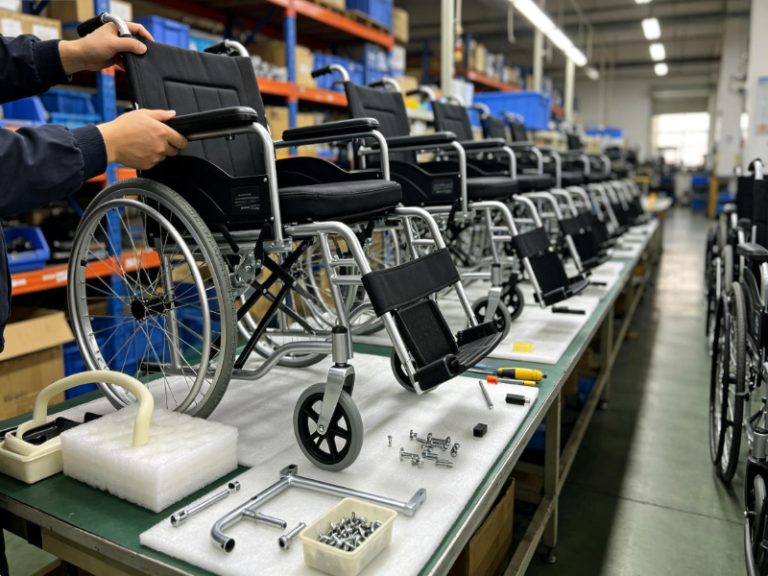
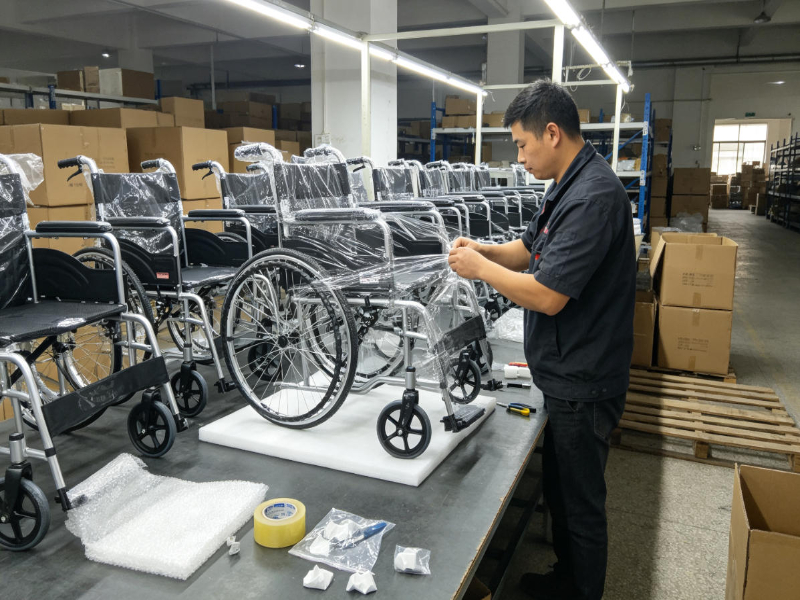
IYASOCARE is a China-based wheelchair manufacturer headquartered in Chongqing. According to its official information, the company focuses on research, development, production and sales of medical and rehabilitation equipment, with manufacturing capabilities covering wheelchairs, mobility products and related rehabilitation equipment. Its factory has specialized workshops for stamping, injection molding, welding and assembly, as well as multiple wheelchair production lines.
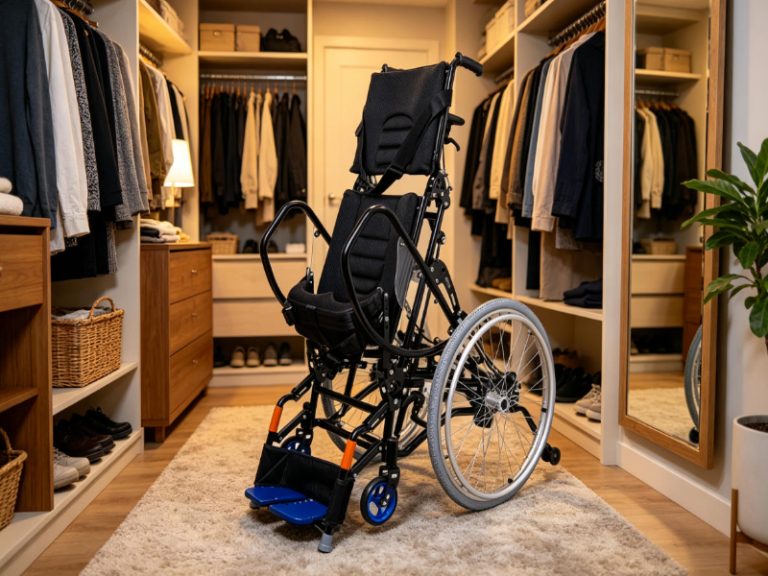
For B2B customers, one of the most interesting aspects is the breadth of its product portfolio. The company’s current catalogue includes electric wheelchairs, lightweight folding wheelchairs, off-road wheelchairs, standing wheelchairs, stair-climbing wheelchairs, beach wheelchairs, pediatric models, sports wheelchairs and transfer wheelchairs.
That variety can be particularly valuable for distributors who do not want to build their business around only one product category.
IYASOCARE also promotes OEM and ODM cooperation. Its official OEM page describes support from product design through mass production, including customization of products for different customer requirements. The company also states that its facilities operate under international certifications including CE and ISO 13485, with TÜV-related certification information also presented through its official channels.
For wholesale buyers, this means the relationship can potentially go beyond purchasing standard products from a catalogue. Depending on the project, buyers can discuss branding, packaging, product configuration and other customization requirements.
Another advantage is its distributor-oriented approach. IYASOCARE describes cooperation models including distributors, regional agents, OEM/ODM customers and strategic partnerships. It also provides product training, technical support, marketing materials and logistics assistance for partners.
For businesses searching specifically for Lieferanten für Elektrorollstühle, this combination of factory manufacturing, product diversity and customization makes IYASOCARE particularly interesting for international wholesale sourcing.
Permobil is one of the most recognized names in advanced power mobility and complex rehabilitation. Its portfolio includes power wheelchairs, manual wheelchairs, seating and positioning systems and power-assist products.
The company’s current product ecosystem emphasizes individualized mobility and advanced seating technology. Its range includes sophisticated power standing solutions and highly configurable power wheelchair platforms.
Permobil is particularly relevant for distributors and healthcare providers serving customers with complex mobility requirements rather than buyers looking exclusively for low-cost wholesale products.
Its international dealer network is also important. Permobil provides distributor-locator resources, making its products accessible through regional partners in different markets.
For premium rehabilitation equipment businesses, Permobil can serve as an important benchmark for product engineering, customization and advanced mobility technology.
Pride Mobility Products is another major name in the powered mobility industry. Its portfolio includes power wheelchairs, mobility scooters and other mobility products, with the Jazzy brand representing an important part of its power wheelchair range.
The company describes itself as a designer and manufacturer of mobility products and maintains operations across several international markets, including Europe, Australia, Canada and other regions.
Its Jazzy range covers different market segments, including lightweight folding power chairs, elevating models and heavier-duty products.
For dealers, Pride’s established dealer network is an important part of its business model. Its official resources also provide product manuals, brochures, warranty information and technical support resources.
This makes Pride particularly relevant to established mobility dealers that prioritize brand recognition and local service structures.
Ottobock is a major German medical technology company with a broad portfolio covering prosthetics, orthotics and mobility solutions.
Its power wheelchair portfolio includes the Juvo family, A200 and Wingus models. The company offers different drive configurations, including front-wheel, mid-wheel and rear-wheel drive, allowing products to be matched to different indoor and outdoor requirements.
Ottobock’s Juvo range is particularly focused on modularity and customization. Its B5/B6 models, for example, offer different drive configurations and adjustable seating options for more complex requirements.
For distributors targeting the European rehabilitation market, Ottobock is an important benchmark because its products demonstrate how power wheelchairs can be integrated with clinical assessment, positioning and individualized configuration.
Invacare has been associated with homecare, rehabilitation and mobility equipment for decades. Its global portfolio includes power wheelchairs, manual wheelchairs, seating and positioning products, patient transfer equipment and daily living aids.
The company’s power mobility offering has historically covered different drive configurations and seating options, making it relevant to healthcare providers as well as mobility equipment dealers.
Invacare is especially useful as a reference point for businesses that want to understand how a broad mobility equipment portfolio can be structured around different user groups, clinical requirements and distribution channels.
Sunrise Medical is another major international mobility equipment company and is particularly well known for its Quickie wheelchair brand.
Its importance to professional buyers comes from the combination of power mobility, manual wheelchairs, seating and positioning solutions and rehabilitation-focused products.
For distributors, Sunrise Medical demonstrates the value of building a complete mobility ecosystem instead of selling electric wheelchairs as isolated products. A customer who needs a power wheelchair may also require seating, positioning, accessories and service support.
That broader product structure is worth studying when developing a long-term B2B wheelchair business.
Karma Medical is another recognized mobility equipment manufacturer from Asia. Its product portfolio includes manual and power wheelchair solutions and rehabilitation equipment.
For international distributors, Asian manufacturers can sometimes offer a useful balance between product development, manufacturing efficiency and export-oriented business models.
Karma is therefore worth comparing when buyers are building a shortlist of Lieferanten für Elektrorollstühle for Asian and international markets.
Vermeiren is a Belgian mobility equipment manufacturer with a long history in wheelchair and rehabilitation products.
The company is particularly relevant for European buyers looking for mobility equipment with established regional distribution and service structures.
For European distributors, a local or regional supply network can sometimes be as important as the factory price. Delivery times, spare parts availability, warranty procedures and regulatory familiarity can significantly influence the total cost of ownership.
Merits Health Products is another international mobility equipment supplier with products covering power wheelchairs and other mobility solutions.
The company is useful for buyers comparing different approaches to power wheelchair design, including portable, standard and more advanced mobility configurations.
When evaluating companies in this category, buyers should compare not only product specifications but also the availability of distributors, replacement components and technical support in their intended market.
Topmedi is another Chinese mobility equipment supplier that international buyers may encounter when researching electric and manual wheelchairs.
Chinese manufacturers can be attractive for wholesale buyers because of the country’s established supply chains for wheelchair frames, motors, batteries, controllers and other components. However, buyers should avoid assuming that every Chinese supplier provides the same level of quality or compliance.
The right approach is to request factory information, certification documents, product samples, inspection procedures and references before making a large purchase.
One of the most important decisions for an importer is understanding the difference between a premium mobility brand and a factory-oriented wholesale supplier.
A premium brand may provide strong clinical support, sophisticated configurations and established dealer networks, but its wholesale structure and pricing may not be suitable for every distributor.
A factory-direct supplier, on the other hand, may provide more flexibility with pricing, customization, packaging and product selection. This can be especially useful for businesses developing their own brand.
For example, IYASOCARE’s official OEM/ODM information emphasizes direct communication from design and production through delivery, while its distributor program supports regional distribution and customized cooperation.
This distinction matters because the “best” supplier depends on the buyer’s business model.
A hospital purchasing a small number of highly customized rehabilitation chairs has different requirements from an importer ordering hundreds of folding electric wheelchairs for retail distribution.
A professional sourcing process should start with a detailed checklist rather than a price request.
Product and engineering
Ask about:
Range, speed and climbing ability should always be compared using the manufacturer’s stated test conditions. A marketing number without a testing method is not enough for a serious procurement decision.
Certification and compliance
Ask for the exact documentation applicable to the product and destination market. Depending on the market, this may involve CE documentation, technical files, declarations of conformity, quality-management certification or other regulatory requirements.
Do not simply ask, “Is this wheelchair certified?” Ask which model, which configuration and which documents are covered.
Production and quality control
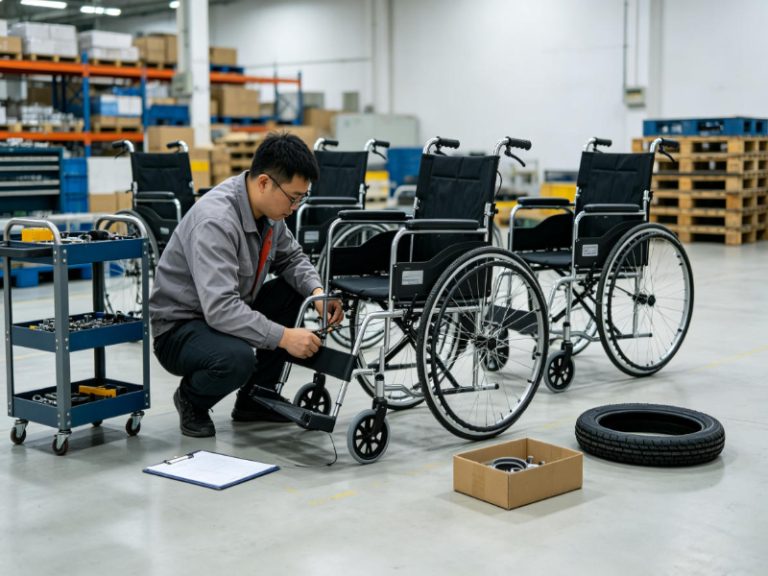
A supplier should be able to explain how incoming components are inspected, how products are tested during assembly and how final quality inspection is performed.
IYASOCARE states that its production includes quality inspections throughout manufacturing and that its products are tested before shipment.
For a new supplier, however, buyers should still conduct their own sample evaluation or independent inspection rather than relying entirely on promotional statements.
Many distributors today are not interested in simply reselling another company’s brand. They want to establish their own identity.
This is where OEM and ODM become important.
A capable Lieferanten für Elektrorollstühle partner may be able to support private-label branding, packaging, colour changes, accessories, product configuration and other project requirements.
For example, a distributor might want a lightweight folding electric wheelchair with its own logo and packaging for the European market, while another buyer may want a heavier outdoor model designed for a different customer group.
IYASOCARE specifically promotes OEM/ODM cooperation and describes customization covering areas such as logos, colours, structures, materials and accessories.
For a growing mobility business, this flexibility can help create a recognizable product portfolio rather than competing only on price.
A distributor rarely wants to depend on a single wheelchair model forever.
Customer needs vary considerably. One customer may need a lightweight folding wheelchair for travel. Another may require a heavy-duty power chair. A rehabilitation centre may need a standing wheelchair, while an outdoor user may need an all-terrain model.
This is why a supplier with a broad catalogue can provide a strategic advantage.
IYASOCARE’s current product catalogue includes more than conventional electric wheelchairs, covering categories such as off-road, stair-climbing, standing, sports, beach, pediatric and transfer wheelchairs.
For distributors, this creates the possibility of gradually expanding the product range without changing suppliers for every new category
A competitive factory price is only one part of the purchasing equation.
Imagine buying 200 electric wheelchairs and discovering six months later that replacement controllers are difficult to obtain. Even if the initial purchase price was excellent, customer complaints and warranty delays can damage the distributor’s reputation.
Before signing a long-term agreement, buyers should therefore discuss:
Spare parts availability → Warranty process → Technical support → Battery shipping → Packaging → Lead time → Shipping terms → Replacement policy → Dealer training
IYASOCARE states that it provides logistics support, product training and technical guidance to partners, while also offering different cooperation models for distributors and regional agents.
These services can be particularly valuable for smaller distributors that do not yet have a large technical department.
There is no universal winner among global electric wheelchair suppliers.
Instead, buyers should score suppliers according to their actual business model.
| Buyer requirement | What to prioritize |
|---|---|
| Large-scale wholesale | Production capacity and pricing |
| Private label | OEM/ODM flexibility |
| European distribution | Regulatory documentation and CE compliance |
| Rehabilitation market | Seating, positioning and clinical options |
| Travel wheelchair market | Lightweight design and folding structure |
| Outdoor market | Motors, suspension and terrain capability |
| New distributor | Training and marketing support |
| Premium market | Brand reputation and advanced configuration |
| Fast-growing brand | Product range and scalable supply |
| Long-term partnership | Spare parts and after-sales support |
The strongest procurement decision is usually not the supplier with the lowest quotation. It is the supplier that offers the best combination of product quality, compliance, communication, commercial flexibility and long-term support.
The international electric wheelchair market offers opportunities for wholesalers, distributors, rehabilitation suppliers and private-label brands, but successful sourcing requires more than comparing prices.
A reliable supplier should be able to demonstrate manufacturing capability, consistent quality control, appropriate documentation, product diversity and dependable communication. For companies searching for Lieferanten für Elektrorollstühle, these factors should be evaluated before negotiating the final price.
Among the companies discussed, IYASOCARE is particularly worth considering for B2B buyers that want a factory-direct relationship, OEM/ODM flexibility and a broad range of electric and specialized wheelchair products. Its official information highlights international certifications, multiple production lines, customization capabilities and distributor support.
At the same time, established international names such as Permobil, Pride Mobility, Ottobock, Invacare, Sunrise Medical, Karma Medical, Vermeiren and Merits provide useful benchmarks for product design, rehabilitation technology, distribution and brand development. Current market research also identifies many of these companies among notable participants in the global electric wheelchair market.
For a new distributor, the smartest approach is to begin with samples, verify documentation, test products in real-world conditions and assess communication before moving to larger orders. For an established importer, the focus should shift toward supply stability, private-label development, spare parts, regional protection and long-term commercial terms.
In the end, the best Lieferanten für Elektrorollstühle are not simply companies that can sell you wheelchairs. They are manufacturing partners that can help you build a reliable mobility business in your market.
1. What should I look for when choosing Lieferanten für Elektrorollstühle?
Look beyond the factory price. Check manufacturing capability, product quality, certification documents, OEM/ODM options, spare parts availability, warranty procedures, delivery reliability and technical support. For distributors, a supplier that can support your business after the initial shipment is generally much more valuable than a supplier offering only a low quotation.
2. Is IYASOCARE suitable for wholesale and OEM electric wheelchair projects?
IYASOCARE is positioned as an international wheelchair manufacturer serving distributors, regional agents and OEM/ODM customers. Its official information highlights factory production, multiple wheelchair categories, customization services, international certification information and partner support. For a serious wholesale project, buyers should still request model-specific documentation, samples and commercial terms before placing a large order.
3. Should I choose a famous brand or a factory-direct supplier?
It depends on your business model. A well-established premium brand may be preferable when brand recognition, clinical support and an existing dealer network are the priority. A factory-direct supplier may be more attractive when competitive wholesale pricing, private labeling, customization and product flexibility are more important. For many growing distributors, comparing both models before making a long-term commitment is the most sensible approach.